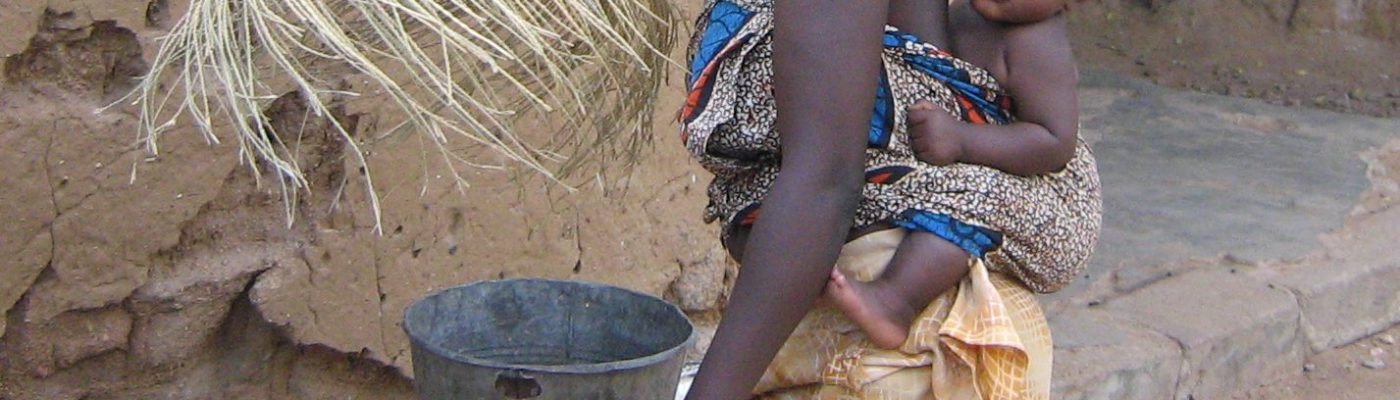
The Story of Nma Adukma by Dr. Stephen Atalebe
Nma Adukma was married to Nba Abunga, and they had two children: Akama and Adingoma. Akama was the firstborn, and she conceived him after many years without a child when many people started insulting her that she was a Kundogne, to wit, a barren woman. Some even whispered that she had sold her womb, whatever that meant. Some women brought their sisters and intentionally sent them to Abunga’s house, hoping that Abunga would be interested in a second wife. Abunga was a wealthy blacksmith who spent all his time in his Kuta zungo (blacksmith hut) pressing bellows to increase oxygen to make the fire hot for heating and forging metals. He made hoes, cutlasses, knives, arrowheads, and sickles. When Abunga showed no interest in the young women they sent to his house, the village gossipers started saying that he was not a man enough and that the burning hearth had weakened his manhood. Indeed, when Nma Adukma was pregnant, some people said that she had stuffed clothes to look like she was pregnant, despite the advice of ‘pregnant detectors’ who said that her pregnancy was genuine. These ‘pregnant detectors’ are not your average test kits. They were women who could detect that a girl was pregnant in less than ten days of conception, a feat that even the average modern HCG tests cannot detect.
Nma Adukma loved and catered for her son like any mother would, but even more so because she didn’t think she could get any child again. When Akama caught Malaria and was sick for a day or two, she worried he would die. She pushed Nba Abunga to the soothsayer’s house, who returned and made some sacrifices. After a few days, Akama felt better again. When Ania, one of the boys in the extended family, three years older than Akama, dislodged Akama’s finger, Nma Adukma went to Ania’s house, pulled him out, and whipped him in front of his parents. No one tried to intervene. She saved food during times of abundance for the hard times before the sowing seasons. Her son never went a day without food as it was in other houses. These are but the tip of the iceberg, demonstrating the extent to which Nma Adukma could go to protect her son.
When she picked her second pregnancy, she was surprised because it came unexpectedly, and she was even more grateful when her second born was a girl, one closer to her heart. Adingoma’s birth, however, did not come carrying good news. A few days after Adingoma’s birth, Nba Abunga died in his zungo. He was not sick and did not show any signs of sickness. Akama, who was there with him, said he started coughing, holding tight to his chest and after rounds of coughs, he slumped to the ground, and that was all; he alerted his mother, who gave a loud shout. Atimbila, a friend of Abunga, was coming to visit his friend when she cried out. He immediately came and checked Abunga, listened for any breaths or signs of life, shaking Abunga’s body, and then shaking his head. He looked up gravely at Nma Adukma, shook his head and declared that Abunga was dead. By this time, nearby clan members heard the cry and came to investigate, and when they saw Abunga’s lifeless body, they cried much louder, drawing more people to Abunga’s house. Thus began Abunga’s funeral; the undertakers took the body to Abunga’s room, prepared and buried him after two days when they had the first part of his funeral.
The death of his father had a profound effect on Akama. He became suddenly withdrawn, always in the house without going out to play with the other boys. He avoided his father’s zungo as though there was a monster inside. His father had hoped he would take after him, just as he had taken after his father and grandfathers. Seeing his father dying right before him had put a full stop to a lineage of blacksmiths tracing back to a time unknown.
After the death of her husband, Nma Adukma struggled to take care of her two children. Adingoma was always sick, shivering on hot sunny days, with a constant fever. Akama was hardworking and helped her with farming, but the land was too vast, and he was still very young to farm it all. Atimbila, who had become a regular visitor to the house after the death of his friend, organised his colleagues to farm her farm. He became the only shoulder she could lean on.
During one dry season, Akama suggested he travel to Kumasi and work for money to care for her. Nma Adukma initially declined to allow him to do so, but Akama persisted and promised that he would return to work on the farm before the rainy season. She allowed him after shedding a calabash full of tears. After he left, she spent her full time on Adingoma, nursing her back to health. She applied the same dedication and attention to Adingoma as to Akama.
The shadow was cast on Nma Adukma’s face when the rainy season came, and Akama did not return. A constant worry and expectant look overshadowed her face, but her attention on Adingoma diverted her from constant worry. She weathered through the rainy season, looking every day, expecting her son to return, but the season came and passed, and there was no sign of Akama. She asked for news of him, and they told her that her son had gone to Takoradi. Whenever someone came home from the South, she would go to their house and ask them about her son. Sometimes, she was lucky to hear some information about him; other times, there was nothing. She forgave him; she was not angry that he did not return as promised; she wanted only to know that he was alive.
Adingoma became a blossoming girl whose beauty attracted young men to her house, who came to help the family on the farm, and though it should have made her happy, she was gripped by the fear of losing her as well. She would be alone if Adingoma married, but it would not be good for her to deny her daughter’s happiness. When Adingoma married, she was left alone, and though she soldiered on in the beginning without giving up, the constant presence and assurance of Atimbila gave her some hope to live on, if only to see her son again.
While Atimbila’s presence comforted her, the rest of the community did not see things as they did. It was the time when the village gossip had a field day. Indeed, it would not be too much to say that the Abunga household has fed the village gossip more excitement and rigour than any other family. The target was Nma Adukma. They said she had killed her husband, and the most daring gossipers suggested witchcraft and tried to link it to why her son had travelled and didn’t want to return. Some even gossiped that Atimbila had a part in Abunga’s death so that he could have Nma Adukma. These rumours stirred excitement, and almost everyone in the village knew of these details except those concerned. Atimbila had no idea that people thought that way about him until he fought with his wife one day. He put a stop to visiting Nma Adukma. Parents warned their children not to go to Abunga’s house and never to take anything from Nma Adukma. With Atimbila’s withdrawal, no one could organise men to farm for her anymore. Adingoma’s husband came regularly with his friends to farm for her, but the regularity became less and less after many years. Adingoma herself now came to help her mother during the rainy season. They could not farm all the family land, so weeds encroached on the farm. Her harvests became less and less, and she barely managed to survive, going on days without food. She thought about her son and wondered what he was doing out there? Though she did not want to agree, it became apparent that she would not see her son again before her death.
She could detect the pains that used to be mild in her youth, has gravitated to sharp pains, could no longer carry a pot of water, walked with a stick and has fallen many times, sometimes unable to rise until she lays there for a long time. On one occasion, she had fallen, tried to rise and fell back again and if not for the timely visit of Adingoma, she would have been dead. She fought to live just to see her son. She would die peacefully if only she could behold her son. Sometimes, she wonders if she has done something wrong; has she brought up her son incorrectly? She showered him with love and care and was always there for him. What could she have done to him? She wondered if witnessing his father’s death affected him more than she could imagine and that he thought that he would end up like his father? She did not understand why all the other boys in the village who travel return regularly, but he was not returning, sending no message or money. She did not care for money, but it showed that her son had either decided to avoid her or could not achieve what he wanted and felt shy coming back.
She was always grateful to Naba Ayine for Adingoma because she could not imagine life without her. Adingoma died during her third childbirth due to too much bleeding, which devastated Nma Adukma. She refused to believe the news, but when she managed to visit the burial, they had to carry her home in a bundle of rags. She cried her heart out; she cried at the top of her voice, her voice rising above the chatter, rising above the Gulugo players; it was a cry of agony and desperation on the realisation of her great loss, a loss which tore her up and almost sapped the life out of her. She cried until she could cry no more, and it took more than a month before her voice cleared, having lost her voice in the process of crying. She cared for nothing except her son after her daughter’s death and spent much time sitting in her falling house thinking about Akama. Her roof was always leaking, and she had placed pots and other containers for the leaking water to fall into. Sometimes, these containers become full, and she wakes up in a pool of water when the rain is persistent. Her bed would be wet and unusable for the rest of the night. On those occasions, she would sit in the corner, leaning against the wall for the rest of the night. The house had no walls, so she competed with animals that walked in and out as though they owned the place and most of the time, she spent the day chasing away goats, dogs and sometimes cows from her house. No one comes to her house anymore, and she sometimes wonders if they will ever discover her body when she dies. Still, she fought to stay alive, only to see her son or at least hear his message.
One day, a white goat entered her house and started defecating right before her. She took her stick and shushed the goat, but the goat was still persistent; she rose and struck the goat with her stick. The stick fell off her hands without hitting the goat, but it also denied her the stick’s support; Nma Adukma fell back with a loud thud.
A neighbour passing by and hearing the fall spoke to others, who also spoke to others, and they sent a team to investigate. They found her sprawled across the yard, her stick lying a few distance away. The uniqueness of Nma Adukma sprawled across the yard was a symbolic belief that the gods accepted the sacrifice. When they make a sacrifice, and the fowl struggles and ends up with its back on the ground and the front sprawled across, the gods have accepted the sacrifice. If the fowl fails to accomplish this feat, the gods have rejected your sacrifice. However, the investigators decided and nodded this acceptance among themselves and called in more people, and the undertakers came to prepare her body. Some said to bury her immediately; others said to send a message to her son or at least get a response from him before burying her.
The first huddle was about how to get money to send someone to Takoradi and who would go. Atimbila offered to go if only someone could help him with money. Akulga, an elder in the community who was a successful cattle trader, took out the money and gave it to Atimbila, and they dispersed. A few hours after Nma Adukma’s death, Atimbila was on a bus headed to Takoradi sponsored by Akulga.
The strangest news surrounding her death was that Atimbila’s journey was useless. Akama heard of the news of the death of his mother and was already on the way, having taken a flight from Accra to Tamale, and after a few hours in the night, he arrived home. He was now a grown man, and many didn’t recognise him until he came into the house, put his bag down and began to cry. He wailed and wailed, and they came to console him. Once Akama’s name was mentioned, it spread out among the crowd. Akama’s name generated interest among the groups of crowds. Akama went into his mother’s room and saw her lying, with her face still the same. The years and time had taken away from her all that she had gained, but her cheekbones had not diminished at all, and there was a certain firm look on her face, one of determination even in death.
The investigators who had met and sent Atimbila suggested interviewing him. They called and spoke to him; they wanted to know why he abandoned his mother. After much hesitation, Akama said he told the story of his father’s death to a pastor, who told him that his mother was a witch and that if he wanted to live, he should not return until she was dead. It made him think that his mother was responsible for his father’s death and had grown some resentment towards her. They asked him if he was a wizard? He said no, but he believed his mother was one; all the children told him, and the pastor confirmed it. One of the elders reminded him that if he accused his mother, he equally stands accused. Witchcraft is believed to be passed on from a mother to her children naturally. This struck him like a sharp bolt; he looked around at the elders and told them that it meant his mother was not a witch since he was not a wizard. At this realisation, he put his hands to his head and began to wail again. They held him and consoled him. Yet their faces wore a scornful look, as though they were unsure if Akama’s tears were genuine or manufactured theatrics designed to give a false front. They asked him what he intended to do now. He said he would like to take his mother’s body to the morgue to allow him to prepare properly for her burial. He later arranged for an ambulance to pick up the body. The undertakers prepared the body and transported it into the ambulance, and a group of undertakers followed the ambulance to the morgue to ensure its safe deposit.
The persistent gossip about the Abunga family made the family a legendary home. The story of Nma Adukma’s misery, her bad luck, the mysterious death of her husband in front of her son, her son escaping, her ailing daughter who died during childbirth, childbirth that wasn’t her first, the withdrawal of Atimbila from her and her symbolic death sprawled across the yard like a sacrificial animal, these rumours found new listeners with her death, the point at which human pass judgment on the deceased in their hearts. The gossipers have been sharpening their teeth for this event. Most of them have grown old, but certain obsessions can hardly depart. The rumours spread farther and faster to neighbouring villages like wildfire, burning the hearts of men and women who heard the details of Nma Adukma’s misery.
Akama wasted no time and immediately started rebuilding the house. His mother’s room had been in ruins, leaking incessantly, and the kitchen barely stood. The remnants of the old zungo sent shivers down his spine. He took charge of the construction while staying in a nearby hotel in Bolga. People from around came to help without asking for payment; he provided them with food. They worked tirelessly day and night, and in just four weeks, the house was transformed. It now had six rooms with a new aluminium zinc roof instead of thatch. Akama met the elders and, after deliberations, scheduled the funeral.
Akama’s actions became an interesting twist to the yarn the gossipers have been weaving about the family. Some question if he was not pretending. They read his every move, who he met, how much he spent, spoke about how the old woman needed just food to eat but could not, and yet here was her son who had all the money no one could count, had stayed away all this while and came within a few hours of his mother death when she had sought everywhere for information about him. So it occurs that the gossipers who had always held Nma Adukma to ransom now became her defenders, reminding everyone how Nma Adukma had whipped Ania when he dislodged Akama’s fingers and how she protected her son. However, the euphoria surrounding Akama’s return and the force of strength it made on the young men in the village was too much to be toppled by the village gossipers. The young ones who were once told not to go to Abunga’s house were now the builders of Abunga’s house.
The news of Nma Adukma’s death travelled so fast that one could say it travelled faster than the speed of light, evident by the congregations of people who came from all directions on her burial day, and these were not just the village’s people, but strangers, those none had ever seen before in the village. Kologo players came from all directions carrying their instruments; Gulugo players assembled in the house. Yongo dancers and deaya dancers came out from all the lands. Her funeral attracted more people than anyone in recent history. All the nearby houses were filled with vast numbers of people who came to witness her burial. Various animals were slaughtered, and alcoholic drinks flowed like rivers to everyone. The musicians played their instruments, and the dancers shook their bodies. The deaya dancers came in their groups, duringa players played their music to enchant dancers who shook their bodies in rhythm.
Akama was surprised by the presence of so many people at her mother’s funeral and tried he could; it baffled him beyond his understanding. He did not invite the musicians, but they came themselves, and some of them composed songs about his mother and sang about the heroic acts of Nba Abunga, the blacksmith. It made him happy, and he carried his head high and sprayed money on the musicians and dancers. Everywhere, the crowds are either spectators or participators. Akama walked from one group of crowds to another, marvelling at them.
While moving from one group to the other, he encountered an old man walking with a stick. The old man looked at his face expectantly as though Akama would recognise him. When that did not interest Akama, the old came directly before him, blocking his path. The old man said his name was Atimbila. The mention of the name brought a cloud over Akama’s face and recognition. Atimbila explained that he had travelled to Takoradi to inform him of his mother’s death, got robbed of his money, and had no money to return until a good person helped him. Akama was not listening so much to what Atimbila said, but a sense of awareness. As he looked at Atimbila, he remembered Atimbila giving something to his father the day before his death. Yes, he remembered. It was some sort of snuff. Nba Abunga tasted that snuff in the morning before he lighted the fire in the hearth. As realisation hit Akama, he looked at the old man, and there standing before him, he found his father’s killer. He accused the man of giving something to his father, which led to his death. The old man looked around nervously to ensure no one heard, but he was wrong.
A few people nearby heard Akama’s words and turned to the ensuing conversation. Atimbila tried to brush it aside, but Akama was persistent, and the gathering crowd looked on with interest. Atimbila agreed that he gave the snuff to Nba Abunga, but he did not poison the snuff. After a few more threats from the growing crowd, Atimbila confessed that he was jealous of Nba Abunga and had spiked the snuff with yabiga. Some people wanted to beat the old man, but Akama asked them not to touch him. One of the old women cried out loudly, and when they asked her why, she said she was sorry because she and other women had mistakenly accused Nma Adukma of killing her husband without knowing that it was Atimbila all along as they had gossiped about, but no one took them seriously especially after Atimbila withdrew from Nma Adukma after he heard the rumour from his wife. If he was not guilty, he would not have withdrawn. These revelations brought shouts from the crowd members. She asked Akama for forgiveness.
These confessions further vindicate his mother from accusations that she killed her husband. It added to the agony and regret he now feels about his mother. He had listened to his pastor and all the voices of young boys calling his mother a witch and had suspected the wrong person for his father’s death. Deep within, he felt the emotional toil of losing his mother; if only he could have come a day or even a month earlier? When he thinks of all that she had gone through and the deprivation that she went through, it tore his heart apart. He promised her he would return in the rainy season but never did. At first, he had nothing, not even lorry fare, to return home, but success came after meeting the pastor and getting the revelations and prayers. This had ingrained in his mind that his mother was indeed a witch. He realised that everything he had always believed about his mother was wrong and his pastor was wrong, but that could not bring back his mother.
Nma Adukma was buried later in the day in a concrete grave. The old gossiper remarked that Nma Adukma had lived in desperation, agony, hunger, and at the extreme limits of poverty, avoided by all and waiting to see her deserted son. Yet, upon death, she was a heroine. The son she had lived to see returned but only to see her dead. People who could not help her when she needed it most are celebrating her. They were absent in her life but present on her death. What could be the reason for this state of affairs?
 My Bolga Online
It’s a great story. Thanks, Stephen. It brings to light the happenings of our time. Congratulations
LikeLike
The storyline is one that is of culture, tradition, gender, and contemporary. The destructive nature of pastors is well presented and l hope our kids get to read this real story. Congratulations Dr Atalebe
LikeLike