
Frafras believe in one God which they call Na’ayine. The word Yine also represents the number ‘one’ (ayina) so that one can say Naba Ayina (The One Supreme chief). Tinga means Earth where humans reside and Yine is the supreme being who resides above in the skies (saazuo).
In Frafra mythology, Na’ayine used to be very closer to Earth, just a stretch of the hand. From the skies of Yine, humans collected rainwater, food, meat, and their livelihoods needs. The food they collected from the skies and took to their homes and cooked. Then one day a greedy man decided that he would roast the meat directly from the skies of Yine instead of collecting the food to cook at home. He collected a huge pile of wood, one on top of the other until they reached the sky of Yine, where the meat hung. He lighted the fire and started to burn the bosom of Yine. He asked people to come and celebrate the feast from Yine directly. Many gathered that day and ate directly from the cooked meat.
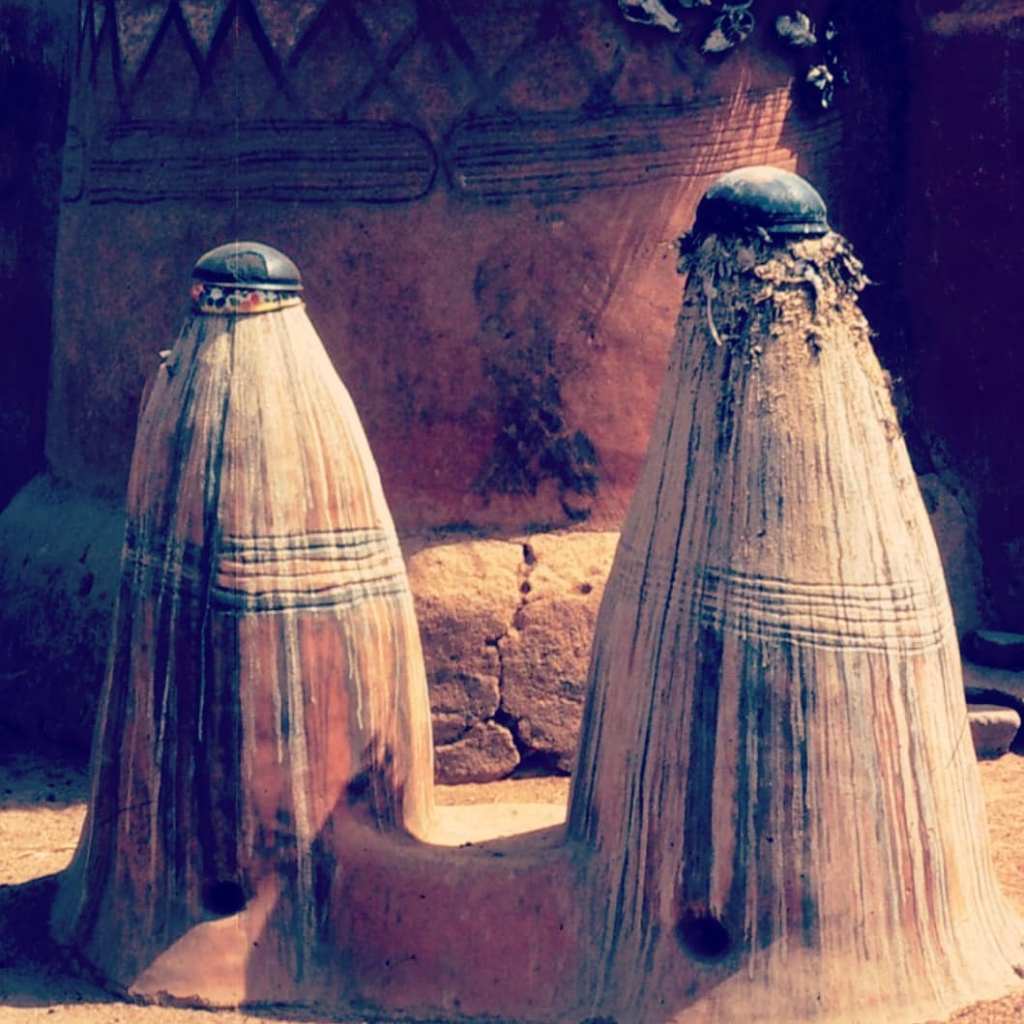
This action made Yine angry and disappointed in humanity. He decided to withdraw from humanity and its destructive tendencies. Yine lifted the sky away from humanity and separated himself from Earth. By so doing, Yine denied humans meat, food, rain, and other livelihoods needs. When the suffering of humanity reached up to Yine, he was touched. He decided to give humans rain, crops, plants, and the assortments of animals to feed on. Humans could no longer communicate directly with Yine, their only option being through mediums such as the spirits of trees, rocks, talismans, totems, items made of mud, usually a mud outcrop in the yard, with feathers and blood mended to it. But most importantly the spirits and souls of the ancestors.
Ancestral worship as practised among the Frafras is a way for the living to remember the dead and honour the memory of the ancestors without whom they could never have been. It’s believed the ancestors watch over them and if they continue to honour them, goodwill comes their way. In Frafra lore, ancestors are revered and worshipped.
Every man in Frafra culture is required to have two gods; your god (which is considered to be your naming god called Sigre). The second god is your father’s god (Soyine). These gods can consist of a mud outcrop or a pot, an item from his living days. If he was a hunter, you put a spear, if he was a blacksmith, you put an anvil, and so forth.
The gods of the grandparents are taken care of by the family head who makes sacrifices to them regularly. The gods of the forefathers are catered for by the clan head. The gods of the community representing common ancestors of the community are catered for by the Tindaana of the land. Some elders used to say that the longer you live, the more gods you accumulate.
Different gods have different conditions and demands. Apart from annual sacrifices, random sacrifices can take place if a matter arises in the family or through the words of the soothsayer. There are two types of sacrifices; dry sacrifice and blood sacrifice. Dry sacrifice uses only flour from millet or Guinea corn, mixed with water on a calabash. Blood sacrifice uses animals and birds. Some gods only consume the colour red; red fowl, red dog, red chick, red goat, and guinea corn. Human sacrifice is foreign to Frafra culture and customs, it was never practiced.
During the yearly harvest festival of adaakoya, families make sacrifices to the ancestors and community gods to show their appreciation for the harvest of the season. The women will brew lots of pito. They will also prepare millet and Guinea corn flour. The pito is brewed three days in advance.
On the day, the elders of each clan will gather at the clan head’s home with pots of pito, fowls, and animals which would be used to make sacrifices to the ancestors of the clan. The elders will drink the pito while the young boys prepare the fowls and animals. Some will be boiled while others to be roasted. From there, they go to the next elder’s home where they make sacrifices to the ancestors in that home. This is continued until they finish making sacrifices to all the gods in the clan to thank them for the harvest.
Once the sacrifices are done, the merry making begins. The only time in the year when they can get to eat the numerous fowls and animals that they have been rearing. There’s always enough meat and pito for everyone and leftovers the next morning. It is usually the only and probably the first time when some young boys and girls get to taste their first pito drink. During this time, it is not forbidden for children to drink an alcoholic beverage. It was just a one-time occasion. In situations where a cow is killed, it can feed the family for the rest of the month. Such occasions always call for either a kologo player or a duringa player. Even if there is none, there are always many other ways of entertainment available.
Written by: SAA for My Bolga Online.
 My Bolga Online
Great research. Clarity is excellent.
LikeLike
I really love to hear more from my home town Bolga the best culture ever
LikeLike