
All Frafras recognise a customary belief called “buuhe”. Although “buuhe” has deeper meanings and connotations, it resembles adultery in English. The belief goes like this. If a man marries a woman, she is still not his wife until he performs, among other things, a rite called “nu’uhe gme’a”.
If the woman sleeps with another man at this stage it doesn’t invalidate anything, except, of course, you know what. However, if this rite is performed, it is believed there will be consequences. Why? Well, it all has to do with this “nu’uhe gme’a” rite. It’s the most significant part of Frafra marriage without which children born out of the marriage are not traditionally the man’s even though they may be biologically his. In Frafra culture, a woman has two funerals; one in her husband’s house and the other in her father’s house. If this rite is not performed, the husband’s house cannot bury her and she cannot have both funerals.
The “nu’uhe gme’a” is performed by the man’s family sending the marriage emissary to the girl’s house. He goes there with a red fowl, sheep or cows, kola, tobacco, and local gin among other items.
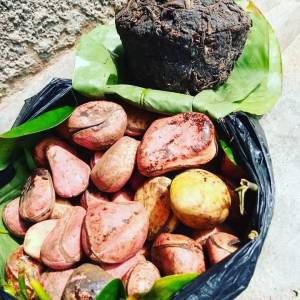
Depending on families and localities, the fowl or animal is used for sacrifices in the girl’s father’s house to her “sigre” (which refers to her naming god). This sacrifice binds and solidifies the marriage. When this is done, any act of infidelity on the part of the woman will have consequences both for her and the man if she doesn’t confess. Frafra culture allows men to marry more than one wife with the ‘permission’ of the first wife, therefore infidelity on the part of men is foreign.
If she commits “buuhe”, she must not sleep with her husband yet. She must go to the marriage emissary’s house first and confess to him. Then some rites will be performed before her husband can decide whether to accept her. In Frafra culture, it is perfectly normal for a man to accept his wife back after she confesses and goes through the rite of purification. This is because the concept of “buuhe” is fluid. Not only does “buuhe” forbid infidelity, but also instances where a married woman inadvertently steps on the mat or sleeping place of a man who is not her husband and depending on localities improper contact.
If the woman commits “buuhe”, doesn’t confess, and sleeps with her husband, the “sigre” god in her father’s house will be defiled and seek revenge. Depending on localities, gods, and beliefs, revenge can come in many forms. Either the woman suffers during childbirth and dies, or the man dies. Sometimes, it can also be their children. Why the man or the children and not just the woman? It all comes down to the “sigre”. Each believed to be different, exacting revenge in different forms. Since most communities have similar “sigre” gods, it can often happen that in a particular village, “buuhe” kills only the men and in others the women and so forth. Stories abound of women who committed “buuhe”, failed to confess, and encountered difficulties during delivery. Once they confessed, had easy childbirth afterward. So are stories of mysterious deaths of young men and women, attributed to “buuhe”. There is no scientific correlation, but a belief system must have value to last the test of time or maybe not.
In the past, when people didn’t travel a lot, it was very rare and often handled accordingly. However, in the present era, things have changed, people now perform weddings and Islamic weddings. Many go through the traditional rites first before the Church or Mosque. This is because Frafra marriage is considered a union between two families. Family within the context of Frafra culture is not just the immediate family. The family consists of a network of extended family relatives and relatives of relatives. Not all these relatives will have the same faith. So although your marriage may be legal within the laws of Ghana, if you don’t perform the local marriage rite, such a marriage will never be recognised by the family both the living and ancestors.
Some people think the most important aspect of Frafra marriage is paying the four cows, but “nu’uhe gme’a” is the most significant because you can pay the four cows but if you don’t go through this rite, the woman is still not yours.
Written by: S.A.A for My Bolga Online.
 My Bolga Online
So if the man commits adultery what happens. Does it takes the same form as the woman
LikeLike
Not thing will happen to the man
LikeLike
This is why I always want to marry from my own tribe…A woman cannot commit adultery and conceal it. So in this way, I’m rest assured that she is all mine so I can also shower her with all the love and care…..
LikeLike
Please educate us more about our culture but we use the word Gurune than frafra
LikeLike
Good write up there, I have been dealing with this matter for long now. You have presented very clear and educative.
LikeLike
This is a good write up. It explains vividly the importance of some of our cultural practices.
LikeLike
I love my culture❤
LikeLike
Well written. I must add that there is just no way for dowry to made without the nuu’he gme’a. The emissary who in Gurune is the Pogsigra is recognized during this ceremony. He is one who delivers the dowry to the woman’s family.
LikeLike
Very educative piece for the young ones in this modern era. The “nu’uhe gme’a rite is so important that without it the marriage can be nullified easily in one day inspite of all other expenses like payment of cows. But with this rite in place the marriage cannot easily be dissolved even when no other expenses made on the bride. It binds the marriage so tight to the extent that even when the husband dies certain rites must be performed to loosen the bondage before another man can go in this widow.
LikeLike
This is extremely educative. The youth must read and know this.
But my question is, if it happens that the woman gives birth without the rites, is the woman’s family ”bound” to give the child to the man’s family if they come with a request? Once again my emphasis is on ” bound ” because this have created problems of late.
LikeLike
Depending on where the woman gave birth, her family will always willingly ask her husband to do the right thing and take his children. In instances of disagreement the matter can drag to the courts which mostly result in the man having his children and given the nu’uhe nua and its accompaniments.
If she out of disagreement returns to her parents for a long period with the children and they raise the children the man can be charged in sheep and money though the money thing is ailian to the Frafra tradition until now.
Simply put once the woman has agreed and told others that the man is responsible for the kids he always has the right over them except when he is so disrespectful and irresponsible to the in-laws that it drags. Children may escape to their parents due to the mostly unacceptable practice of keeping daughter’s children who are denigrated by their contemporaries as fatherless or those who do not have homes.
LikeLike
Thanks for the great job you are doing. I just discovered this site, mybolgaonline not quite long. I believe alot more will benefit from the education provided on your site.
LikeLike
I wish to have a Frafra woman as my wife. May Allah give me one
LikeLike
I need a girl from the Fragra land to marry
I am from Navrongo land
LikeLike
Very well delivered
LikeLike
A very good write-up ,in this Mordern times most Gurusi Parents down South give their daughters to Southners in Marriage and take all these rites in form of money.Others don’t even take and will not tell their daughter the importance of the rites. Most Gurusis, mostly the elite don’t value their culture and just follow the allien wedding to show off their wealth.The Law course too must recognise our culture and rule on them in favour of the customs where one flouts it
LikeLike
A very brilliant write up
LikeLike
That’s a good write up and more educating to our generation
Our must stay, let’s pass it over .🤝
LikeLike
I think ‘frafra’ refers to the tribe but gurune is the language we speak
LikeLike
What if the man you married is not a frafra man and you commit adultery what happens then
LikeLike
Please if the woman sleeps with another man, will the man who committed the sin with the woman have any effect??
Again, why do some women still go ahead to cheat knowing very well the consequences of the rites?
LikeLike