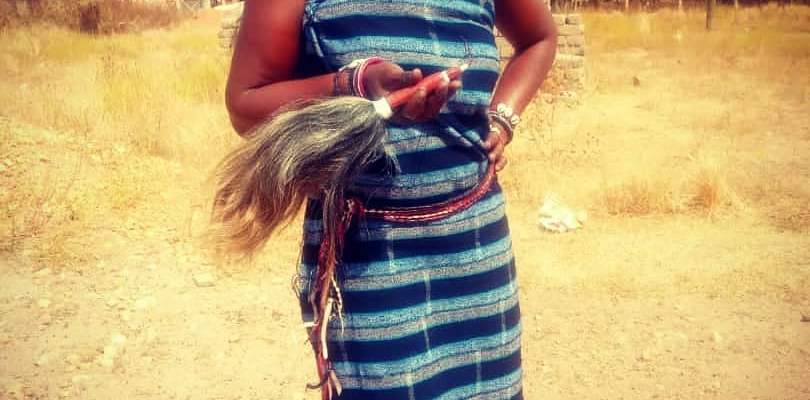
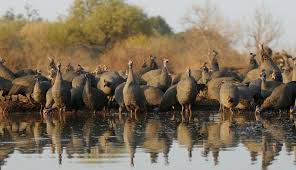
The Frafra marriage is unique among many cultures. Marriage in the Frafra society involves the union of two families rather than two individuals. The family of the man has to convince those of the woman that they are capable of taking care of their daughter. The test involves the boy’s family taking a number of smoked guinea fowls, kola, tobacco, and drinks to the girl’s house for a number of times before the girl’s family agrees to start formal proceedings.
In times past, it was possible for a girl to marry a man she hardly knows. Usually at the market or during festivals, funerals or when men go to farm in a different village, the man and his friends will plot and lure the girl to the outskirts of the market and then carry her to their village. Sometimes, the girl will resist, other times she will silently concede especially if she is interested. Even if she is not interested, it doesn’t matter, she will still be carried away to the boy’s house. Once in the man’s house, the man and his friends will organise all sorts of entertainment to keep her entertained so that she does not think about her father’s house. People in the village will troupe to the man’s house to catch a glimpse of her and know her. The girl is not allowed to go anywhere alone. Even if she is going to free herself, someone follows her. Many girls have escaped back to their father’s house, so she is often closely monitored.
The next day, the family head will send someone to the girl’s father’s house to inform them that they have their daughter. In this first visit, the man’s family will take along three smoked guinea fowls; buy the locally brewed gin, a couple of kola nuts, and some tobacco. Sometimes, the girl’s parents will reject this on the first visit, other times, they will accept the items but they will not tell the visitors any better thing. Usually, they are told to go and come back another time because the elder of the house has travelled even if the elder is among them. This is always the beginning of the test.However, the newly married man is now encouraged to work hard and get her pregnant. This is often advocated if the girl or her parents are showing signs of refusing to continue with the marriage. In the Frafra culture, it was often not accepted to have a sister giving birth at home except those sanctioned to do so, so once she is pregnant, she will definitely have to stay. Moreover, it was thought that once the man sleeps with her, she will become more emotionally attached to him and will not be willing to leave.
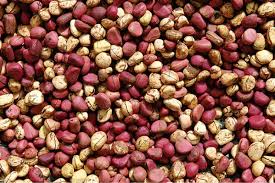
The next visit to the girl’s parents’ house will still not produce any better outcome. In some cases, the man’s family will be made to visit the girl’s house for more than 3 to 4 times before they now accept them and ask them to begin formal arrangements. Indeed, among the Nabdams and the Talensi, the man’s family might visit the girl’s house for more than 7 to 8 times before they accept to begin formal arrangements. This can be so costly because every visit, you carry along the same things, 3 guinea fowls, kola nuts, local gin and tobacco. When the girl’s family finally agrees to start the marriage rites, the man’s family will now invite them to come to their house and “drink water.” The girl’s family will send young men with a few old people to accompany them to the man’s house. When they come, and they do so late in the night, the man’s family is supposed to kill a dog, two goats and a number of fowls. This meat is not eaten in the man’s house but is taken back to the girl’s father’s house. This process is called “hand running.”
In a few days later, the man’s family will then send an old man along with a big cock and kola, sheep or cows (but not necessary) to the girl’s family for the knocking rite. This process is very important because without it any child born to them will belong to the girl’s family. So this is a crucial step. For some families, again especially those in the Talensi and the Nabdam areas, this process is skipped at this stage and made to come last because once the man’s family does this process, they can decide to delay paying the cows.
The next step is the payment of four cows. This could be paid in instalments or all at once. This also goes with a batakari cloth to the girl’s father. In modern times, the four cows are now reduced to mostly two or three but this depends on the girl’s family. Some families will press for the four cows while others will not. If you refuse to pay your wife’s cows, her family will wait patiently till she gives birth to a girl and once the girl is married, her bride pride is used to pay for her mother’s unfulfilled bride price.
In modern days, the issue of paying the four cows has come under heavy attack and some parents recognising the economic hardships do not press their in-laws for the cows but rather urge the man to use that and take good care of their daughter. The payment of the cows has been a reason why some men and women in the area cannot marry. It also explains why most foreigners are not always willing to marry Frafra women and the reason why most Frafra men marry women outside the tribe in order to avoid all these. Nevertheless, Frafra women are worth all the cows and more than that.
Once the man and woman are formally married, the man will sometimes have to go with some of his friends to the girl’s house to formally greet them and introduce himself and sometimes to farm for the in-laws.
The end. Thank you for your time
 My Bolga Online
You are doing very well and I am so happy to see you doing this story.
LikeLike
Some except like the local gin, making the girl pregnant and smoked guinea fowls) may be modern however Frafra area is very wide and might be happening somewhere.
Only cola, tobacco and well dressed guinea fowls (2). If the girl is eloped she does not sleep with the to be husband. In many cases she is not even sent directly to the suitors compound but a family house until there is an agreement to contract the marriage. Marriage is a family affair so the husband has no decision especially if that is the first wife to be and no family wants its name to be smeared by bringing subculture behaviour to the family by making a cohabitor pregnant. I also saw hand running it is simply running. The word is corrupted. It is zoer to make big or give respect. It shows the in-laws that she has relatives. Reciprocally the husband side will also show that she has not married a single man but a family. They will entertain them according to their desire. It is not compulsorily a dog and co.In modern day it is the party thrown after a marriage blessing(refreshment, item 13) etc.
LikeLike
Nice piece
LikeLike
Very elaborate, it complements the writer narrative, is good for frafra culture.
LikeLike
Very insightful story and perfectly explained. God bless you guys.
LikeLike
I love this culture,it is very nice and rich in tradition.
I wish I will get a frafra girl to marry one day .
LikeLike
Very interesting culture,I wish I should marry from there.
LikeLike
Nice write up. It’s very educative especially for non speaking Ghanaians. For those who do not know the culture of Frafras it’s out there for us all.
Well done
LikeLike
More of such truthful information. Actually from the archives
LikeLike
Educative
LikeLike
The paragraph that starts with “In times past…” gives the false impression that kidnapping was a common mode of marriage. Can you imagine a girl being “carried” screaming by men from one village to the other? This mode occurred only occasionally with the coming of cars and taxis. The common traditional practice is for the man and his relatives or friends to pay a number of visits to the girl’s home, each time taking the traditional gifts of smoked guineafowl and colanuts. This will be done till the girl’s family bring the wooing to an end (ku-eh) if she has more than one suitor.
LikeLike
Very interesting piece.. I personally learned a lot. Thank you for the wonderful look into this !
LikeLike
I’m proud of our culture. Thanks very much.👌
LikeLike
Very educative piece but I think we have to do more consultation or research about this and other traditional or cultural practices and publish them here for us to read and abreast ourselves.
Please, may I know if the word FRAFRA is how we were originally called before the coming of the whites?
I know the language is Gurune so what about the people?
LikeLike
It appears that the Guruneh people never thought of themselves other than as human . That is, they didn’t name themselves. They were named by others.
“Frafra” was given by the White colonialists. “Gurunsi” was given by the Zambarima to mean “a worshipper of idols”.
The so-called “Nankane” also greet visitors with the word “fara fara”. How come they are not called Frafra?
LikeLike
Nice write up 🤗
LikeLike
As we know, ‘Frafra’ is a corruption of the greeting Fara Fara. Some Guruneh scholars define Frafra as encompassing the BONABOTO area, but excluding Nankam (which is closer to Guruneh than Taln or Nabt). This is strange to me. The chiefs of Bongo, Nangodi and Tongo trace their roots to the Mamprussi. So they go to the Nayiri to be enskinned.
My view is that our language is Guruneh and is the same as the language spoken by the people around Navrongo (the so-called Nankansi). Frafra is an artificial construct.
LikeLike
How proud I am to a frafra woman.what a beautiful tradition
LikeLike
It appears that the Guruneh people never thought of themselves other than as human . That is, they didn’t name themselves. They were named by others.
“Frafra” was given by the White colonialists. “Gurunsi” was given by the Zambarima to mean “a worshipper of idols”.
The so-called “Nankane” also greet visitors with the word “fara fara”. How come they are not called Frafra?
LikeLike
Can I have the marriage list to marry a frafra woman
LikeLike
CAN U PLS GIVE ME ALL THE ENGAGEMENT LIST ITEMS.CURRENT LIST PLS
LikeLike
Actually this practice of kidnapping girls was also celebrated in the European Alps: there is a film called ‘
Seven Brides for Seven Brothers’ that describes such an event.
Needless to say, kidnapping young ladies is nowadays illegal and might lead to a long prison sentence, but is is always interesting to find out about old customs.
LikeLike
I love my frafra culture. frafra marriage is very unique and similar to the Ibos. After marriage the woman will not be able to have an affair/be with another man as there will be consequence which can be deadly sometimes.
LikeLike