
His name was Abugre. He was a very good kologo player. Every day, we congregated in his house to listen and dance to his kologo music. He lived alone with his mother in Adaboro’s house, the house next to ours. His father died before I was born. Then one cloudy day, he said he was going to Kumasi. It was disheartening to see him go. Not only did he deny us his beautiful kologo music, but he also left his mother alone in the house. Her name was Nma Atipoka, a very caring and hardworking woman whose gentle smile melted rocks. She told us, when we asked her of him, that he will be coming back during the rainy season. The rainy season came and passed, but no sign of him. Season after season, year after year, we waited, but he never returned.
As I grew, a tumour of rumours spread like a virus. Some said he saw a glowing ball of fire levitating from the top of a tree. He was returning from one of his kologo gigs in the middle of the night. Others said he abhorred the hoe. I don’t know which is true if any at all.
The years passed by. Old age crept in like a thief in the middle of the night. She started growing old and weak, so one of the boys from the extended family offered to stay with her. Every year, the men in the village will organise communal labour and farm her land and renovate her home after the devastations of the rainy season.
If the mountain will not come to Mohammed, Mohammed will go to the mountain. After waiting for more than twenty years without seeing her son Nma Atipoka decided to go to him. She sold all the harvest from the farm and on one Bolga market day, she bought a ticket bound for Kumasi. She had decided enough was enough, no more waiting in vain. She must see her son before she dies. She wished just to behold him and at least meet her grandchildren if any or at least try to convince him to come back home with her.
When she got to the relatives in Kumasi, they informed her that her son was living in a village outside of Kumasi and there was only one person who knew where her son lived in a village around Akwatia.
After a long torturous journey, first in an overloaded passenger car and then doing the last lag on legs, they finally emerged to a small farming community. It was evening when they arrived.
Children playing football in the field, farmers returning from farms, carrying their produce, and women busy in the kitchen making dinner. The helper took her to her son’s residence, but it was locked from outside.
His mansion was a wooden shack attached to another wooden shack which in turn was joined to other wooden shacks in a long lane of shanty homes. They waited for him. When he arrived, he was drunk beyond the day, wavering in his walks and oblivious to what was happening, he bypassed them and staggered up to his door. She shouted his name. He turned and waved dismissingly and concentrated on opening the door. She rose and went up to him and called out his name again, mentioning her name. He turned and immediately, the alcohol vanished from him as reality hit him like a bolt of lighting. According to the helper who witnessed the event, he jumped up and down in excitement, as torrents of tears flowed freely down her cheeks like the Kulaa river. Neighbours started gathering around and before anyone could guess, it turned out to be a celebration.
That evening, Abugre played his kologo for the village, but I guess he was doing it for his mother. The three of them slept together in the small wooden shack. The floor was dusty and they slept on a big mat made from palm fronts. The next morning when he was sober, they spoke. She asked him if he had a wife or children. He had none. He had no property. His only valuable was perhaps his kologo instrument. She asked him to come back to Bolga with her, but he declined. She begged and cried for him to come back home with her. She had always kept the house hoping that he would return. He could come back home, the family land was vast, she can arrange a girl for him to marry so the family line continues but he shook his head. When everything failed, she begged him, to at least, move to Kumasi and find some job in Kumasi, there are relatives there he can stay with until things improve. To that request, he agreed but not immediately as he had no money. She told him that she had brought some money along with her.
The next day, the three of them headed back to Kumasi.
At the time, I was on an errand in Kumasi and went to visit relatives there and that was when I met them. There was a kind of satisfaction on her face that had been absent for a long time. It was not even a week when he got a job in a sawmill company. The pay wasn’t enough but it was better than what he got in Akwatia. She stayed in Kumasi for an extended time before she came back home. When she returned, she didn’t go back to what once used to be her house. She had lived there because she hoped that her son will come back one day. She no longer needed it. She stayed with the extended family. After a few years, her son got sick and died. The news was devastating for everyone, but most especially for her. It broke her, but I guess she had already been broken many times. The realisation that the family line of Adaboro has come to an end, the twist evident in the self-fulfilling name. Daboro means ruins in Gurune.
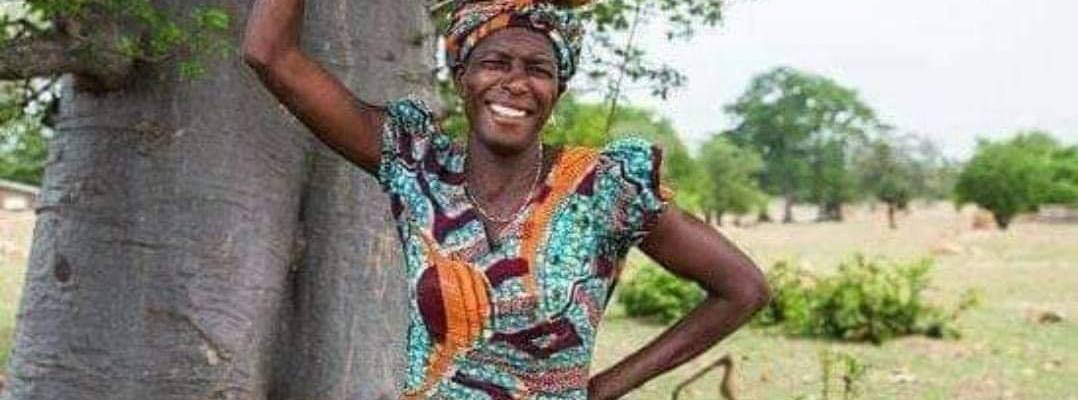
I went to visit her with my wife some years ago. It was the first time she was seeing her, and she gave her a name: Ayenbise, which can be translated as ‘just see’ or whatever your translation maybe. I have tried to make meaning of this name, is it a piece of advice? A puzzle? A statement of fact related to her life or ours? Maybe I should have asked her for an explanation, but it’s too late now. She died two years ago. Her funeral was only comparable to the eldest and respected members of the community. Thousands of mourning relatives flooded the family houses, drummers from across the land came, some from far, others near, in their deaya regalia, kologo players sang of her courage, gentle soul, and her resilience. Adaboro’s house is in ruins now, almost unrecognisable except a young baobab tree that once stood in front of the house. It may be in ruins, but ‘just see’ a patch of land as a patch of memory.
No matter where you may find yourself in the world, my brothers and sisters, make time to visit home regularly and value your mother if she is still alive. You can never be too busy to go home for a visit.
 My Bolga Online
The good Lord will guide us all.
LikeLike
You can never be too busy visiting home. A true statement indeed
LikeLike
Never should I used the name of work or business as an excuse not to visit my family members most especially my parents
LikeLike