Brief History
Before Nkrumah led Ghana to independence, the Gold Coast operated under the British parliamentary system. Nkrumah served as the first Prime Minister from 1952 until 1957, when the country gained full independence.
After independence, the country adopted a presidential republican system—a form of democracy modelled after the American style—where the Head of State and Head of Government are combined in one office: the President. This contrasts with the British parliamentary system, where the Prime Minister runs the government while a monarch or ceremonial president is the symbolic head of state.
This system served its purpose and was a necessary adoption due to the prevailing thought at the time, when it was important not to copy the colonial masters’ systems. While it has brought us this far, the system still leaves much to be desired in our body politic.
The Major Flaw of the 1992 Constitution
The 1992 Constitution, modelled along the same lines, gave Ghana a strong presidency. But over the years, as noted by the Constitution Review Commission (CRC), this setup has created a bottleneck in governance and accountability.
“There is widespread concern that the presidency is excessively powerful. Many Ghanaians feel distanced from power and see limited accountability in executive decision-making.”
Unlike in parliamentary systems where duties are split, our President is expected to do it all: lead the nation, manage the economy, oversee the military, represent the country abroad, and handle crises at home.
It’s an overwhelming concentration of power. Expecting one person to wear all these hats is inefficient, outdated, counterproductive, and adds to bureaucratic hurdles that become overwhelming. It places a heavy burden on one office and one man who, like everyone else, has just the same 24 hours. They become overburdened, doing many things simultaneously—meetings at home, abroad, and within Africa.
A Better Way is The Dual Executive Model
Around the world, many of the most stable and developed democracies separate the roles of symbolic leadership and executive management.
In the United Kingdom, the monarch is the ceremonial Head of State, while the Prime Minister runs the government. In France, a President and a Prime Minister exist; the President focuses on diplomacy and defence, while the Prime Minister manages internal affairs. In Germany, the President is largely ceremonial, while the Chancellor (equivalent to a Prime Minister) drives policy.
India, Ireland, Italy, Israel, the Czech Republic, Greece, Austria, and Portugal all follow similar models. So do constitutional monarchies like Sweden, the Netherlands, and Japan. In these countries, separating leadership roles increases efficiency, improves accountability, and enhances policy delivery. It’s time for Ghana to consider the same.
A Pan-African Case for Change
Nkrumah wanted to see a united Africa, but the sort of democracy that Africans adopted made it impossible to see that unity, because the leaders were occupied with internal affairs, managing their countries and fighting the opposition. They had no time for African affairs.
This is not different from what our ancestors were doing. They concentrated within each other’s enclaves; they did not seek a wider unity because each had problems.
The current system of democracy practised in Africa ensures that presidents are overwhelmed, dealing with internal and external affairs. They have no time.
If Ghana, and, for that matter, Africa, is serious about development, stability, Pan-African unity, and global relevance, it must adopt a dual executive system with a ceremonial President and a development-focused Prime Minister. With the President divested from internal affairs, they can concentrate on working on better collaborations with other African countries. They would not be overwhelmed, and they would have time to undo the injustices that have been done. Such a system will increase efficiency and allow them to pursue better development and collaborations on the international front.
As Nkrumah declared, “The independence of Ghana is meaningless unless it is linked up with the total liberation of the African continent.”
In the same spirit, our hope for a united Africa is meaningless until African countries adopt ceremonial Presidents focused on diplomacy, leaders who can build continental relationships, while Prime Ministers back home build economies. Europe does this. It works. It’s time Africa did too. It works. Why not us?
Ghana, as a democratic pioneer on the continent, should lead the charge toward governance structures that reflect our developmental priorities, not outdated colonial blueprints.
What the Constitution Review Commission Already Told Us
This suggestion for a dual executive in Ghana is not a foreign proposal. It was practised right before independence. Ghanaians expressed the same opinions. During its consultations, the Constitution Review Commission received over 83,000 submissions. Among the strongest topics, many Ghanaians raised concerns on included excessive concentration of power in the presidency. Lack of continuity in national development. The need to separate ceremonial functions from active governance. Calls for an independent National Development Planning Commission, insulated from short-term politics.
The message was clear: Ghanaians want a government that works, not one that wields power for its own sake.
A Constitution Worth Changing for the Right Reasons
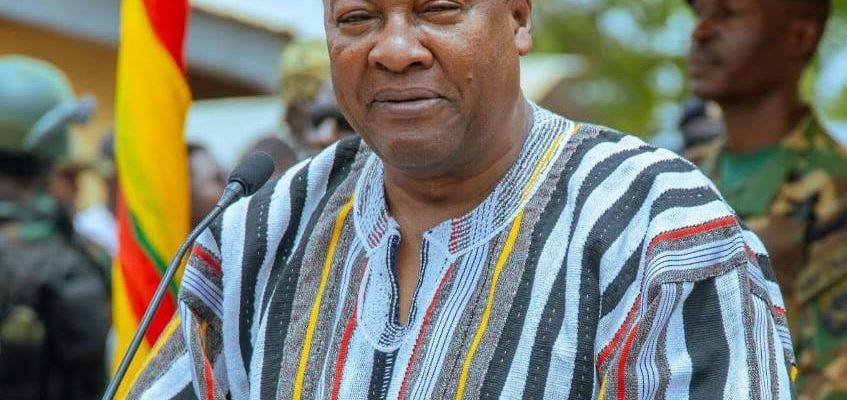
In recent months, President John Mahama has surprised many with his performance. The cedi has stabilised, revenue efficiency has improved, and his firm grip on his appointees stands in sharp contrast to the so-called “clearing agent” presidency of the past. This is his second term, and by the Constitution, he cannot contest again.
Yet, whispers are already rising, calls in some quarters for a constitutional amendment allowing him to run for a third term. Some say his current momentum could carry him into another victory, if the law would permit.
If we touch the Constitution at all, it must not be to extend presidential terms, but to restructure the very system that creates this kind of overdependence on one man in the first place.
President John Mahama could remain president after his four years (if Ghanaians want) and return not as an all-powerful President, but as a ceremonial one, above the fray, guiding national unity and diplomacy. At the same time, a Prime Minister handles the actual government business. That is a healthier legacy and a more stable system for Ghana’s future. A smarter system. A Ghana that works.
After all, the Constitution Review Commission gave the roadmap over a decade ago. Suppose there’s any amendment that should be made. In that case, it must be to split the roles, reduce the burden and share power, concentrating on internal affairs and on international diplomacy.
OP-ED b Dr Stephen Atalebe for My Bolga Online
 My Bolga Online