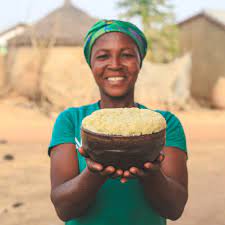
In northern Ghana, the Shea nut trees are similar to the “cocoa” trees in the southern part of the country. Shea nut trees are only present in the north, making them scarce and not present in the south. These trees are predominantly found in the far lands. God created them naturally, unlike cocoa, which had its seeds smuggled to the country.
In the olden days, womanhood was measured by one’s ability to process these shea nuts to get shea butter for domestic use. It was incumbent on every woman to learn the processing trade and have shea butter in her hut to demonstrate her womanhood.
Previously, women enforced this responsibility on themselves by waking up early to be soaked by the morning dew to these far lands to pick the Shea butter fruits.
A message was carried to all the women in the clan and house to infuse the spirit of togetherness to assess these fruits, which could serve as breakfast, lunch and supper depending on one’s financial muscles.
In fact, after these women chase these fruits and, more importantly, the kernel used to extract this shea butter for consumption, they place importance on extraction by carefully gathering all the kernels to initiate the method after enjoying the fruit. Concerning children consuming the fruits and deciding to test the might of their kernel by giving them names of valour like “Jack and Killer” in knocking against each other in games to show the one that can stand the test of not cracking, our mothers never relent on their oars of getting us this cold pressed oil called Shea butter.
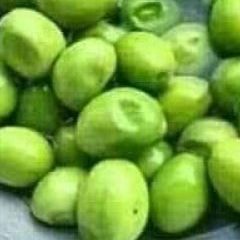
The nuts are parboiled to be placed before the sunshine for it to dry. After it dries, the shells of these nuts are taken out, leaving the kernel itself. The dried kernel that has experienced a good amount of sunshine can have traces of oil on it due to the constant exposure to the sun.
However, the kernel is crashed into pieces to undergo dry frying. When the cracked kernel is constantly turned over in the big coal pot with a fire under, it is taken to the grinding meal to be ground. The kernel is ground into a thick liquid form.
The time-honoured extraction begins with hot boiled water, mixing the ground kernel steadily. In fact, to some extent, the women add this mixture with cold water to speed up the extraction process.
After these hard women use their fists to continuously turn over the mixture with enough energy, they dilute it. Their frequent stirring of the mix will let the residue settle at the bottom while leaving the oil to float on top of the mixture.
The women will continue carrying this time-spending process by holding the extracted shea butter while leaving the waste in the mixture. They continue to ensure they get all the oil while disposing of the waste.
The extracted Shea butter is finally boiled to refine the Shea butter ready for consumption. After the women boil it, they allow the residue to settle down while leaving the refined Shea butter. A well-extracted Shea butter tastes nice with eggs forming, while a poorly extracted Shea butter tastes bitter.
In the process of engaging in this tedious extraction, a stranger or visitor who comes to the house is given a huge hospitable gesture by using a finger to fetch the shea butter to put on the leg of the small toe of the stranger. This gesture stems from the fact that the stranger might have believed to be a god who is portrayed as a human being. Also, the person might have belonged to a certain shrine that forbids the consumption of shea butter. The extraction will not be well processed if the woman fails to live up to this gesture.
The Shea butter also plays a significant role in our rites and traditions. Apart from strangers wearing an artificial moustache from being served with a chilled or hot “Zonko’om”, our funeral rites can never go without Shea butter.
In fact, a neat woman of high personal hygiene was measured by her ability to extract Shea butter. Wouldn’t the idea of this extraction of Shea butter become new to our future generations as we have developed an appetite for foreign oil to neglect our own? If our ancestors were alive, wouldn’t they grumble in their world as we use sunflower oil on our funerals and rites?
We need to preserve the extraction of our delicious Shea butter, which has higher health benefits than foreign ones; if not, Westerners will one day come to Africa to teach us how to extract Shea butter in our land.
Written by Kingsley Asumbere
 My Bolga Online